Hamburg, Germany | Global Service in 52+ Countries
[email protected] | +49 (0) 40 123 456

GEA HeatWorks Sustainability Commitment

Engineering thermal solutions that reduce environmental impact while delivering reliable, long-lasting performance for our customers.

Our Sustainability Pillars

A structured approach to reducing the environmental footprint of industrial heat exchange.

1

Energy-Efficient Design

Heat exchangers are optimized for maximum thermal transfer per unit of energy consumed. Counter-flow configurations achieve approach temperatures as low as 1-2K. Enhanced chevron plate geometries and low-pressure-drop port designs reduce the parasitic energy burden on pumps and fans by 10-15% compared to standard corrugation patterns.

2

Heat Recovery Engineering

Heat recovery systems reclaim thermal energy from exhaust air, process waste heat, and condensate return streams. Properly sized counter-flow plate exchangers achieve recovery efficiencies of 85-95% at design conditions — for a typical 500 kW food processing waste heat stream, this translates to annual natural gas savings of approximately 400-450 MWh.

3

Material Responsibility

Over 85% of equipment mass consists of recyclable stainless steel (304/316L) and copper alloys. Precision CNC fabrication minimizes material waste to under 5% of input stock. An end-of-life return program accepts decommissioned units for material recovery. Packaging across all three facilities uses recycled and recyclable materials exclusively since 2020.

4

Low-GWP Refrigerant Compatibility

Brazed plate and shell-and-tube exchangers are rated for natural refrigerants including CO2 (R-744) at transcritical pressures up to 130 bar, ammonia (R-717) in steel construction, and propane (R-290) with ATEX-compliant configurations. These designs support the transition mandated by the EU F-Gas Regulation (revised 2024) and the Kigali Amendment to the Montreal Protocol.

ISO 14001 Certified Operations

The environmental management system across all three manufacturing facilities has carried ISO 14001:2015 certification since 2012. Annual third-party audits by TUV Rheinland verify compliance with waste reduction targets, energy consumption benchmarks, and emissions reporting requirements.

Key environmental performance indicators tracked and reported annually:

  • Energy consumption per unit of production output (kWh/unit)
  • Water consumption in manufacturing and testing processes
  • Waste diversion rate (recycling vs. landfill)
  • Scope 1 and Scope 2 greenhouse gas emissions
  • Volatile organic compound (VOC) emissions from coating processes
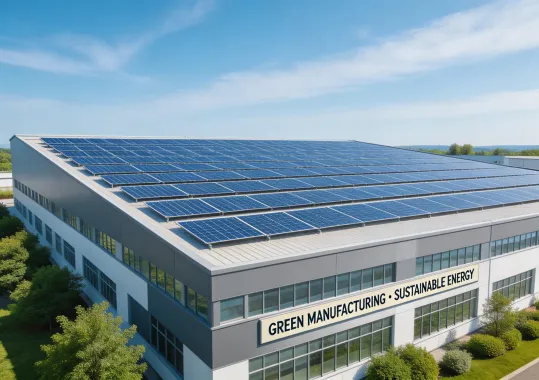
GEA HeatWorks ISO 14001 certified manufacturing facility

Our Roadmap

Measurable milestones on our path to lower environmental impact.

2026

100% renewable electricity at Hamburg headquarters

2028

30% reduction in manufacturing energy intensity vs. 2020 baseline

2030

90% recyclable content across all product lines

2035

Carbon neutral Scope 1 & 2 emissions across all facilities

How We Verify Environmental Performance

Sustainability claims require measurement. Below is how GEA HeatWorks validates thermal efficiency and environmental metrics across the product lifecycle.

Thermal Performance Testing

Every heat exchanger undergoes factory acceptance testing (FAT) before shipment. For plate heat exchangers, this includes hydrostatic pressure testing at 1.3x design pressure per PED 2014/68/EU requirements and thermal performance verification against AHRI Standard 400 where applicable. Log mean temperature difference (LMTD) and overall heat transfer coefficient (U-value) are recorded and compared against design calculations. Deviations exceeding 5% from predicted performance trigger engineering review before release.

Field Performance Monitoring

For customers enrolled in preventive maintenance programs, field engineers measure actual approach temperatures, pressure drops, and fouling factors during scheduled service visits. These measurements are benchmarked against original commissioning data to quantify degradation and schedule cleaning or gasket replacement before efficiency loss exceeds 10%. Customers can request a free sample test with their actual process fluids at our Hamburg test lab to validate material compatibility and expected fouling behavior before committing to a full-scale order.

Sustainability Constraints We Acknowledge

  • Stainless steel production impact: While 85% of our equipment mass is recyclable, primary stainless steel production remains energy-intensive (approximately 2.5-3.0 tonnes CO2 per tonne of 316L). Increasing recycled-content sourcing is a priority but subject to supply chain availability and cost premiums of 8-15%.
  • Natural refrigerant design constraints: Designing exchangers for R-744 (CO2) transcritical operation at 90-130 bar requires thicker pressure-bearing components, increasing material usage by 15-25% compared to conventional HFC-rated designs at 25-30 bar.
  • Scope 3 emissions not yet quantified: Our 2035 carbon neutrality target covers Scope 1 and Scope 2 emissions only. Scope 3 (supply chain, logistics, end-of-life) quantification is underway but not yet complete, and these emissions are expected to represent the majority of our total footprint.
  • Heat recovery efficiency depends on installation: The 85-95% recovery efficiency cited for counter-flow plate exchangers assumes clean fluids, correct flow ratios, and minimal fouling. Actual field recovery rates vary between 70-90% depending on maintenance practices and process conditions.

Looking for Energy-Efficient Heat Exchange Solutions?

Let engineers with heat recovery and low-GWP system experience help you reduce energy costs and environmental impact.

Discuss Your Project