Application-specific heat exchange solutions designed for the unique thermal challenges of each sector we serve.
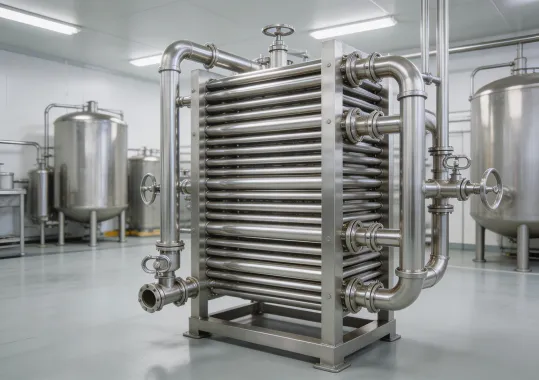
Heat exchangers are at the heart of food safety — pasteurization, cooling, CIP, and product-to-product heat recovery all depend on precise temperature control and hygienic design.
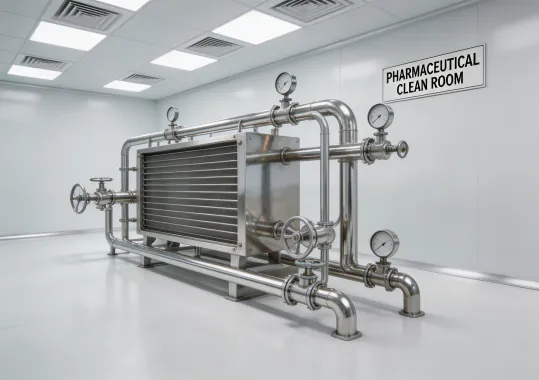
Pharmaceutical processes demand absolute temperature precision and surface cleanliness that meets cGMP requirements. Our exchangers deliver both.
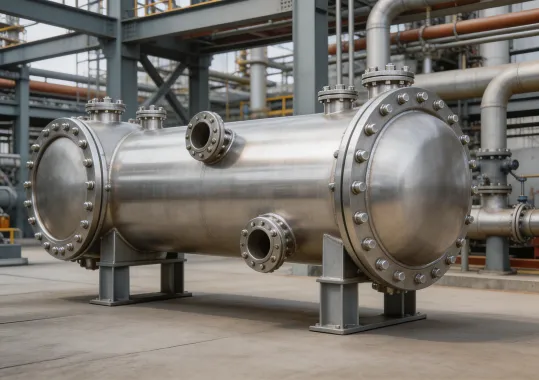
Chemical environments subject heat exchangers to aggressive fluids, high pressures, and elevated temperatures. We engineer for durability in every detail.
Data centers demand high-density cooling with N+1 redundancy and minimal PUE impact. Our heat exchangers optimize both chilled water and free cooling loops.
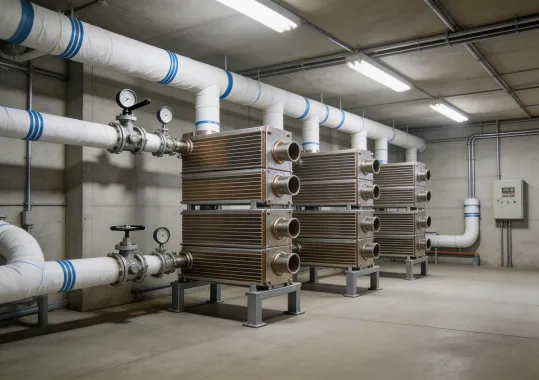
Building owners and MEP engineers need efficient, reliable heat exchange for chilled water, condenser water, and heat recovery circuits.
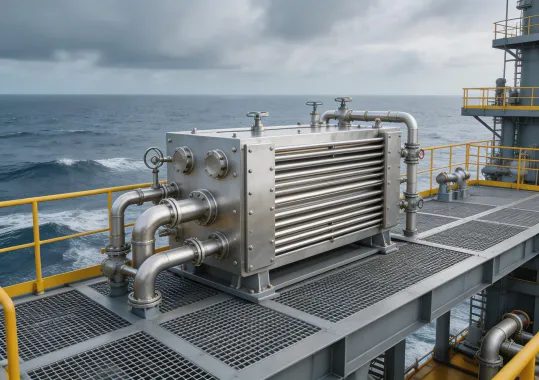
Marine and offshore environments demand extreme corrosion resistance and compact packaging. We specify titanium and super duplex as standard for seawater duty.
Choosing the right heat exchanger type involves balancing multiple engineering and financial factors. Below are two common selection decisions and the trade-offs involved.
This is one of the most frequent engineering decisions in thermal system design. The choice depends on fluid properties, fouling tendency, pressure requirements, and available floor space.
Selection guidance: For clean-fluid HVAC and food processing duties below 25 bar, plate exchangers typically deliver lower lifecycle cost. For high-pressure chemical processes, high-fouling duties, or steam applications, shell-and-tube remains the preferred choice.
The EU F-Gas Regulation (revised 2024) and Kigali Amendment are accelerating the phase-down of high-GWP HFC refrigerants. Heat exchanger specification must account for the refrigerant choice early in the design process.
GEA HeatWorks designs exchangers compatible with both pathways. For new-build projects, natural refrigerants often offer the lowest 20-year total cost of ownership. For retrofits with budget constraints, HFO blends can extend equipment life while reducing GWP by 50-75% vs. legacy HFCs.
Transparent engineering means acknowledging where our equipment performs at its limits. The following factors should be considered during heat exchanger specification.
Gasketed plate heat exchangers are limited to approximately 25-30 bar and 180°C by gasket material properties (NBR, EPDM, Viton). Applications exceeding these limits require welded plate or shell-and-tube construction at higher cost and longer lead times.
Plate exchangers with narrow channel gaps (2-5 mm) are susceptible to blockage from fluids containing suspended solids above 300 μm or high fiber content. Pre-filtration or strainer installation is required for such applications, adding to system cost and maintenance scope.
Custom-engineered units in exotic alloys (titanium, Hastelloy, super duplex) carry minimum order values and lead times of 14-22 weeks due to raw material procurement. Standard stainless steel plate frames ship in 4-6 weeks, but capacity during peak season (Q2/Q3) may extend by 2-3 weeks.
Tell us about your process conditions and temperature requirements. Application engineers with sector-specific experience will recommend the right heat exchanger configuration.
Start a Project Discussion